Queries in NEO-CRF are a system of manual data queries designed to verify the accuracy and completeness of information entered into clinical trial forms. Their primary goal is to eliminate errors, ensure data consistency and protocol compliance, and improve overall data quality prior to statistical analysis.
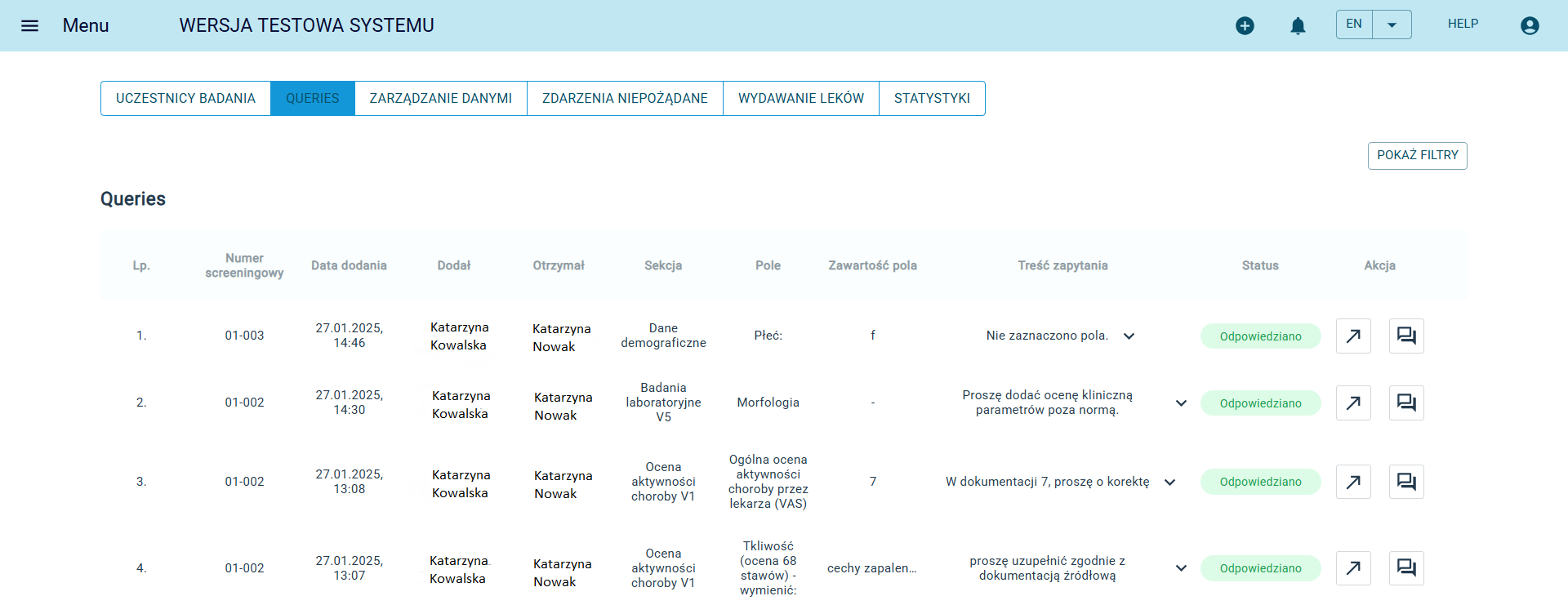
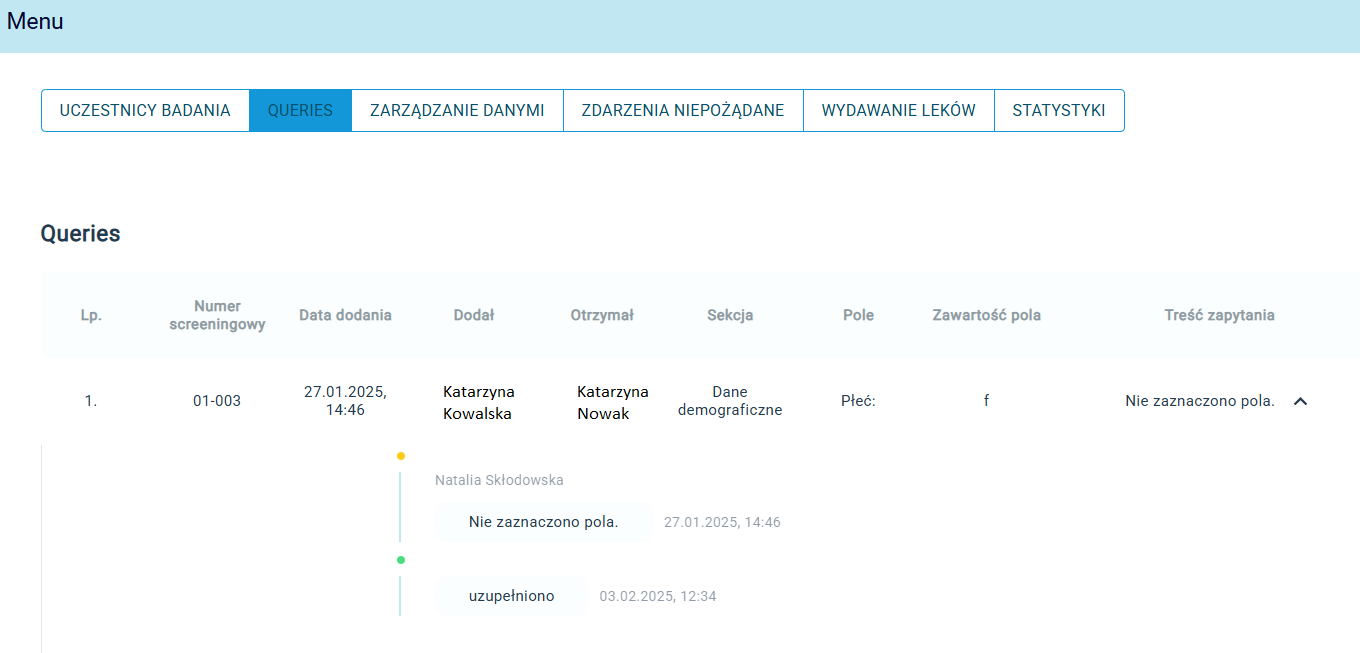
All data-related queries are collected in a dedicated tab. Each query is marked with a specific status — open, reopen, responded, overdue or closed — allowing for easy tracking of its current state. The panel displays key information about each query, including sender, recipient, date of creation, status, associated form sections and fields, as well as the query content. Users can review the full history of queries and responses related to a specific form field directly from the panel view.
Advantages of the query system
Queries in NEO-CRF are a key component of data quality assurance in clinical trials, helping to quickly identify and correct errors, thereby ensuring the reliability and compliance of clical trial results.
Queries in NEO-CRF are used to detect and correct errors, omissions, and inconsistencies in data entered during a clinical trial. They ensure compliance with the protocol and enhance patient safety by quickly identifying irregularities. They are also crucial during inspections by regulatory agencies such as the FDA or EMA, as they document the accuracy and reliability of the data.
Key advantages
Accelerated data verification process – enables prompt detection, documentation, and resolution of discrepancies, significantly enhancing the efficiency of data cleaning and source data validation activities.
Complete audit trail – all changes are systematically recorded.
Improved data quality – eliminating inconsistencies enhances the credibility and reliability of clinical trial outcomes.
Component Features
● Dedicated data collection tab, ● Status Management – Open, Reopen Query, Response, Overdue, Closed, ● Clear method for highlighting new queries, ● Complete history of queries and responses for each form element.

 PL
PL